En Bloc Sale in Singapore: The New 70% and 65% Rules
How an en bloc (collective) sale works in Singapore: the new 70% and 65% consent rules, the steps, seller stamp duty, the ABSD trap and real deals.
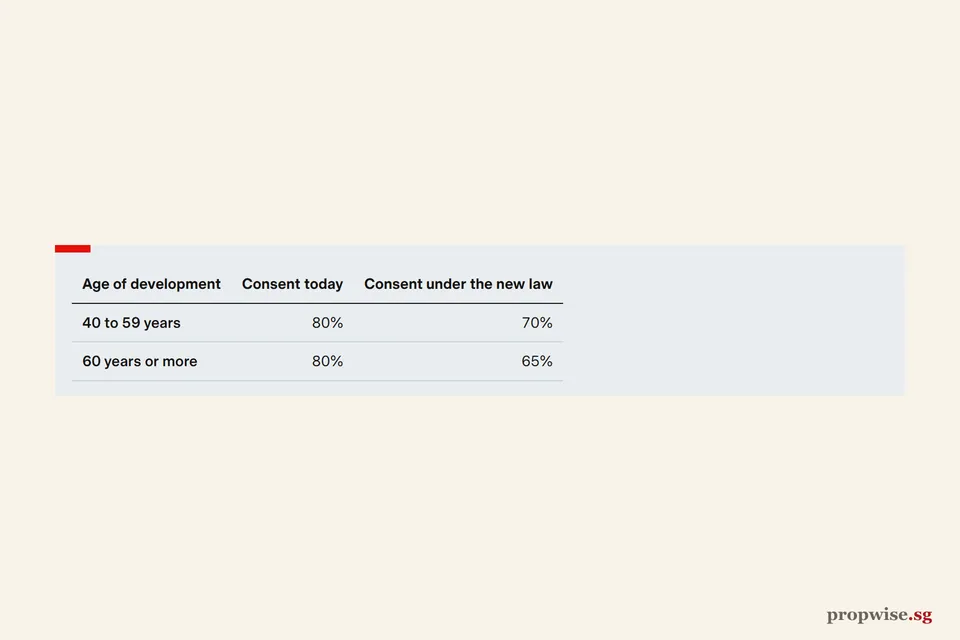
An en bloc sale lets a majority of owners sell a whole private estate to one buyer, and the law binds the rest. Consent is 80% today. Parliament has passed 70% for estates aged 40 to 59 and 65% for estates aged 60 and above, from a start date not yet announced.
At a glance
- Today: 80% consent (by share value and by strata area) for estates 10 years or older; 90% for younger ones.
- After the start date: 70% for estates aged 40 to 59 years and 65% for estates aged 60 and above. Age counts from the latest TOP.
- Other changes: 35% of owners needed to start the process (now 20%), 6 months to collect signatures (now 12) and a 3-year pause after a failed attempt (now 2).
- Taxes still bite: Seller’s Stamp Duty applies to en bloc sales, and buying a replacement home before your sale completes can trigger ABSD.
- Most attempts fail. Treat any en bloc premium as a bonus on an old condo, a pleasant surprise and never the plan.
What is an en bloc sale, and why do developers want one?
A collective sale is the sale of every unit in a strata-titled development to one buyer, usually a developer. If only a majority agrees, the Land Titles (Strata) Act lets that majority apply to the Strata Titles Board (STB) for an order that binds everyone.
Developers buy because the land can hold more than the old building. Many 1970s to 1990s estates sit well below the plot ratio that the URA Master Plan now allows. A developer can pay owners more than their units are worth as homes. Its bid depends on the charges it pays the state to top up the lease or use more floor area, construction costs and selling risk.
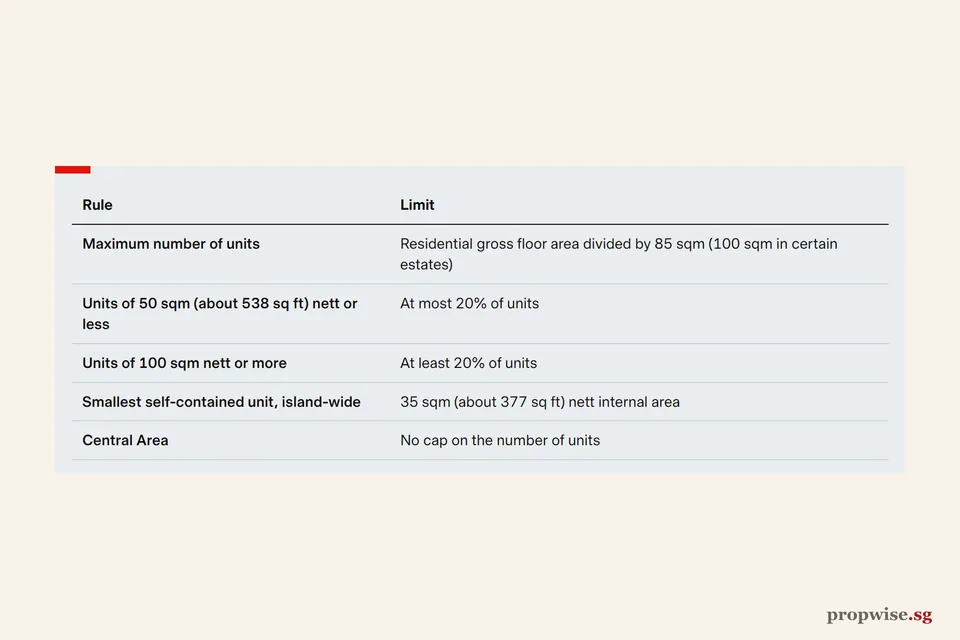
Then there is stamp duty. Developers pay 40% ABSD on residential sites. Of that, 35 points are remitted only if they finish the project and sell every unit within the deadline: 5 years for a normal site.
From 29 July 2026, very large en bloc sites get more time: 6 years for 700 to 1,399 units and 7 years for 1,400 or more. The deadline is the main reason developers bid with care. When developer ABSD rose from 15% to 30% on 6 July 2018, the 2017 to 2018 en bloc boom faded within months. The full ABSD history sits on the rules page and the policy timeline.
Years
Source: MND, revisions to the ABSD regime for en bloc redevelopments (from 29 July 2026).
What are the new 2026 en bloc rules?
The Ministry of Law’s proposals of 4 August 2026 passed with the Bill on 8 September 2026. The aim is to help ageing estates redevelop while shortening the time owners spend under pressure.
| Rule | Current law (still in force) | After the amendments commence |
|---|---|---|
| Consent, estate under 10 years | 90% | 90% (unchanged) |
| Consent, 10 to 39 years | 80% | 80% (unchanged) |
| Consent, 40 to 59 years | 80% | 70% |
| Consent, 60 years and above | 80% | 65% |
| Owners needed to start (requisition a meeting) | 20% of share value or 25% of owners | 35% of share value or 35% of owners |
| Time to collect signatures | 12 months from first signature | 6 months |
| Pause after a failed attempt | 2 years | 3 years |
| Cap on extra payment to objectors | 0.25% of proceeds per lot | Higher of 0.5% of proceeds or S$2,000 per lot |
Some details matter more than the headline numbers:
- Both tests apply. The consent level must be met by share value and by strata area, as in the Bill text.
- Age runs from the latest TOP (or CSC) in the development, not from the start of the land lease.
- Transition. The old rules continue for any sale where the first owner signed the collective sale agreement (CSA) before commencement. A committee that is mid-signing can opt in to the new rules: it holds a general meeting and starts a new CSA, and then has 7 months from commencement.
- Existing safeguards stay. In his second reading speech, Minister Edwin Tong said that the STB’s checks stay the same. The STB still examines whether the sale is in good faith and whether an objector would suffer a financial loss. In the debate, he also said that a lawyer must be present when owners sign a CSA in Singapore, as CNA reported.
When do the new en bloc rules start?
The Act comes into force on a date that the Minister appoints in the Gazette. No date has been announced yet, and the amendments have yet to take effect.
Some committees are waiting. Braddell View’s owners expect to sign only “after the law takes effect”, according to CNA. Former HUDC estates Laguna Park and Ivory Heights ended their 2026 attempts after they did not reach 80%, CNA reported.
How does an en bloc sale work, step by step?
Under the current Act, a typical attempt runs like this:
- Requisition. Owners with 20% of share value (or 25% of owners) ask the council to call a general meeting.
- Collective sale committee (CSC). The meeting elects a CSC of 3 to 14 owners. Members must declare conflicts of interest, for example if they are related to a developer or agent.
- Terms before signatures. The CSC appoints a lawyer, agent and valuer, and owners approve the apportionment method and CSA terms (including the reserve price) at general meetings.
- Signatures. Owners sign the CSA until the threshold is reached, within the time limit.
- Tender. The site is sold by public tender or auction. If no bid meets the reserve price, a private deal is allowed within 10 weeks of the close.
- STB application. Once a buyer signs, the CSC applies to the STB. Objectors get 21 days to file objections. The STB must try mediation first. If objections remain, the STB hears the case, or the case can move to the High Court.
- Completion. The sale completes, proceeds are paid out by the agreed formula, and owners move out.
From the first meeting to the money in your bank account, even a smooth sale often takes well over a year. Objectors add more time. The paperwork, at least, keeps you busy.
How much do you get from an en bloc sale?
Proceeds are split by the formula owners approved, usually by share value and strata area. What matters is what your share buys you next.
Say you and your spouse own a 1,200 sq ft unit and your share of an en bloc sale is S$2.0m. You want a S$2.2m replacement condo nearby:
- Buyer’s Stamp Duty on S$2.2m is S$79,600 (1% on the first S$180,000, 2% on the next S$180,000, 3% on the next S$640,000, 4% on the next S$500,000 and 5% on the last S$700,000).
- Your gap is about S$279,600 before legal fees and moving costs, so you must fund it from savings, CPF or a new loan. Run the numbers with the Propwise mortgage calculator.
- The new home is likely to be smaller. A “windfall” often buys a similar location at a smaller size, or a similar size further out.
If you bought recently, check the holding period. Seller’s Stamp Duty applies to collective sales, including to owners who did not agree to sell. For homes bought on or after 4 July 2025, SSD is 16%, 12%, 8% and 4% for sales within years one to four. The disposal date is the date that the collective sale contract is signed.
% of the price. The disposal date is the date the collective sale contract is signed.
Source: IRAS, Seller's Stamp Duty (residential) (2 October 2026).
Income tax is rarely an issue. Gains from selling a Singapore home are generally not taxable as capital gains. IRAS can tax them if you trade in property.
Can you buy a replacement home before the sale completes?
You can, and this is where en bloc sellers lose real money. En bloc sellers get no special ABSD relief. If you buy your next home before your en bloc sale completes, you own two homes on the purchase date.
A Singaporean couple then pays 20% ABSD upfront. On a S$2.2m home, that is S$440,000. The current rates for every buyer type are on the rules page.
Married couples with at least one Singapore Citizen can claim it back under the married-couple remission. They must sell the first home within 6 months of buying a completed home, or within 6 months of TOP if the new home is still under construction. IRAS does not extend the deadline. En bloc timelines slip because of STB objections and court appeals, so a completed replacement home can leave you stuck. Single owners have no refund route at all, except some citizens aged 55 and above who buy a lower-value home.
S$
Source: IRAS, Buyer's Stamp Duty (2 October 2026); IRAS, Additional Buyer's Stamp Duty. Married couples with at least one citizen can claim the ABSD back under the married-couple remission if they sell the first home within the deadline.
Some sellers move to an HDB resale flat. Since 28 July 2026, private owners no longer wait 15 months to buy a non-subsidised resale flat without an HDB loan. They must sell the private home within 6 months of completing the flat purchase. The 30-month wait-out still applies if you want a grant or an HDB loan.
Which en bloc deals have actually happened?
The seven deals below are recent ones confirmed on a news page. They are industrial buildings, a mixed block on Orchard Road, two small residential blocks of nine units and one large condo, Loyang Valley.
| Project | What it is | Tenure | Price | Status |
|---|---|---|---|---|
| Tan Boon Liat Building | Industrial site on Outram Road | Freehold | S$950m | Conditional agreement, July 2026 |
| Loyang Valley | Condo, 362 units, Pasir Ris | 99 years from 1982 | S$880m | Sold, April 2026, third attempt |
| The Centrepoint rear block | 66 retail and 66 residential units, Orchard Road | Leasehold | S$391.9m | Sold, February 2026 |
| Kewalram House | Industrial, Bukit Merah | 99 years from 1961 | S$120.51m | Sold, March 2026 |
| Ching Shine Industrial Building | Industrial, 52 units, Shaw Road | Freehold | S$113.2m | Sold, April 2025, 80% consent |
| Starpoint | Residential, 9 units and a house, Pasir Panjang | Freehold | S$55.3m | Sold, November 2025 |
| Chiku Mansions | Residential, 9 units, Joo Chiat | Freehold | Over S$22m | Sold, September 2025 |
Source: Mingtiandi (July 2026); Yahoo News Singapore (April 2026); EdgeProp Singapore (March 2026).
Loyang Valley (362 units) sold for S$880m on its third attempt. Tan Boon Liat Building is still a conditional agreement, and its owners need 80% consent and the STB’s approval. Of the seven deals, only Loyang Valley is a large condo estate.
Lower thresholds leave a developer’s sums as they were. With 9,320 private units on the 2026 Government Land Sales Confirmed List, developers can buy state land without convincing hundreds of owners. Of 71 estates with 700 or more units, only four are aged 40 to 59, EdgeProp noted. The new 70% rule has few large estates to apply to.
What should an owner check before agreeing to sell?
- Read the CSA before you sign: the reserve price, apportionment, fees and what happens if the sale fails.
- Price your next home first, after stamp duty, and check whether you need a loan at your age.
- Map the ABSD and SSD dates before you commit to a replacement property.
- Objecting is a right. You can file an objection with the STB within 21 days of the application. The Board must refuse the sale if it is not in good faith or if it would cause an objecting owner a financial loss as the Act defines it. Disagreeing on price alone rarely succeeds.
If you are thinking of buying an old condo for its en bloc potential, value it as a home first, because lease decay is real if the sale never happens. See our guides on buying into an older development and valuing leasehold property.
Bottom line
The 2026 amendments make en bloc sales easier for estates aged 40 and above. Nothing changes until a start date is gazetted, and sales already signing stay under the 80% rule. Developers’ bids still depend on ABSD deadlines and state land supply.
As an owner, focus on what your share will buy next, and get the stamp duty timing right. For the full duty tables, see our stamp duty guide.
Rules and rates as at 10 November 2026.
1 reader comment
Simon Osm
Thank you for the insight.