Shoebox Units in Singapore: Are They Good Investments? (2026)
Are shoebox condos worth buying to let out in 2026? URA unit-size rules, net yield and cash-flow maths with ABSD, SSD and loan limits, and liveability.
How we made this. Updated for 2026 with AI-assisted research. Figures are linked to their sources — check them before you act.
A shoebox unit can look like a bargain: a total price under S$1m and a gross yield that beats larger homes. After property tax, vacancy, a high price per square foot, a 4-year Seller’s Stamp Duty window and, for second-home buyers, 20% ABSD, the return is thinner. They can work for a buyer who understands the numbers. They are a poor fit for one who is buying the brochure yield.
At a glance
- There is no official definition. The market usually means a home under about 500 sq ft (about 46 sqm).
- URA limits how many small units a new non-landed project outside the Central Area can have. At most 20% of units may have a nett internal area of 50 sqm or less, and no self-contained unit may be under 35 sqm.
- In our worked example, a 4.3% gross yield becomes about 2.7% net on price, and 2.2% for a buyer who pays ABSD.
- On those figures, a second-home buyer needs about S$697,000 in cash and CPF for a S$900,000 unit.
- Selling within four years of buying triggers 16%, 12%, 8% or 4% SSD on homes bought from 4 July 2025.
What counts as a shoebox, and what the rules say
No law defines “shoebox”. A 2011 industry study and the minister of the day used “under 500 square feet” and the term has stuck. 500 sq ft is about 46 sqm.
The rules are about how many small units a project may contain, not about the word. Under URA’s current guideline, for non-landed housing outside the Central Area:
- The maximum number of units is the residential gross floor area divided by 85 sqm. In certain estates the divisor is 100 sqm.
- At most 20% of units may have a nett internal area of 50 sqm (about 538 sq ft) or less. At least 20% must be 100 sqm or more.
- Every self-contained unit island-wide must be at least 35 sqm (about 377 sq ft) nett internal area.
- There is no cap on the number of units in the Central Area.
URA introduced the cap in 2012, when it used a divisor of 70 sqm; it moved to 85 sqm from January 2019. We covered it at the time in Sayonara Shoeboxes?. The aim was to stop projects made up mostly of tiny units. It did not ban small units.
Note that the sizes above are nett internal areas. The size on a brochure is usually the strata area, which can include balconies, air-con ledges and void areas. A unit sold as 450 sq ft may have less usable floor inside.
Why the pitch works
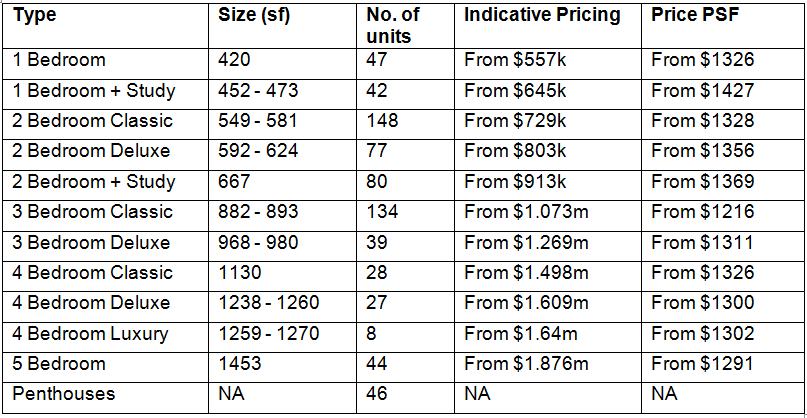
Small units cost less in total, so they fit a buyer with moderate cash. They also tend to carry a higher price per square foot than larger units in the same project. Rent per square foot is higher too. The result is a bigger gross yield on a smaller cheque.
Here is a labelled example, not market data. Say a project has a 450 sq ft unit and a 900 sq ft unit.
| Shoebox | Two-bedroom | |
|---|---|---|
| Size | 450 sq ft | 900 sq ft |
| Price | S$900,000 (S$2,000 psf) | S$1.53m (S$1,700 psf) |
| Monthly rent | S$3,200 (S$7.11 psf) | S$4,800 (S$5.33 psf) |
| Gross yield | 4.3% | 3.8% |
On gross yield the shoebox wins. But the pitch stops there. See our guide to rental yield for why gross yield flatters.
From gross yield to net yield
Take the S$900,000 unit renting at S$3,200 a month. All the cost figures below are our assumptions for the example.
| Item | Per year |
|---|---|
| Gross rent (S$3,200 × 12) | S$38,400 |
| Property tax, non-owner-occupied rates, taking annual value as S$38,400 | −S$5,280 |
| Maintenance fees, assumed S$300 a month | −S$3,600 |
| Vacancy, one month a year | −S$3,200 |
| Agent fee on a new tenant, half a month’s rent | −S$1,600 |
| Net income | S$24,720 |
Net yield on price: 24,720 ÷ 900,000 = 2.7%. This ignores repairs, furnishing, legal fees and income tax. Private homes must be let for at least three months at a time, so short-stay income is not a safe base.
The rental market is not tight. In Q2 2026 URA reported a vacancy rate of 6.4% islandwide, with 5.6% in the Outside Central Region, and rents up 0.7% on the quarter. Other owners in the same project compete for the same tenants.
The financing and tax maths
The same unit costs different buyers very different amounts. Case A is a citizen with no other property: 0% ABSD and a 75% loan. Case B is a citizen who already owns a home with a loan: 20% ABSD and a 45% loan. Rates, limits and duties come from MAS, IRAS BSD and IRAS ABSD.
| S$900,000 unit, 30-year loan | Case A | Case B |
|---|---|---|
| Loan-to-value limit | 75% | 45% |
| Loan | S$675,000 | S$405,000 |
| Cash and CPF for the rest of the price | S$225,000 | S$495,000 |
| BSD | S$21,600 | S$21,600 |
| ABSD | S$0 | S$180,000 |
| Total up front, before legal fees | S$246,600 | S$696,600 |
| Instalment at 1.7% | S$2,395 | S$1,437 |
| Monthly net rent after costs (S$24,720 ÷ 12) | S$2,060 | S$2,060 |
| Monthly cash flow at 1.7% | −S$335 | +S$623 |
| Instalment at the 4% test rate | S$3,223 | S$1,934 |
| Monthly cash flow at 4% | −S$1,163 | +S$126 |
| Net yield on total cost (price + BSD + ABSD) | 2.7% | 2.2% |
Notes on the table:
- 1.7% sits within the roughly 1.5% to 1.8% quoted for floating packages in early October 2026 (The Business Times, 2 Oct 2026). It could rise.
- Banks test your loan at 4% for the 55% debt limit. At that rate the Case A instalment alone needs about S$5,860 a month of gross income, and the Case B instalment about S$3,520, on top of your other debts. Check yours in our mortgage calculator and read our guide to TDSR.
- Part of each instalment repays principal, so the negative cash flow in Case A is partly saving. But it is cash you must find every month.
- Case B looks better monthly only because the owner put in about S$450,000 more cash. The extra S$180,000 of ABSD earns nothing. A married couple with at least one citizen can claim ABSD back only by selling their first home within six months. Single citizens have a refund route only from age 55.
The exit
You make money from a shoebox when you sell for more than your total cost. Costs include stamp duty, interest, fees and any years of vacancy. Three things matter.
The holding period. For homes bought from 4 July 2025, SSD is 16%, 12%, 8% and 4% if you sell within one, two, three and four years. Flipping a unit on a small price gain no longer works.
The buyer pool. Your buyers will be singles, couples without children, other investors and retirees. Families usually need more space. In 2011 and 2012 shoebox units were popular with investors. Then URA changed the rules for new projects. Policy can change again, and a unit that was easy to sell in one phase of the market may be slow in another.
Competition. Many small units from one project reach the rental and resale market at once. Check how many identical units are listed in the same project before you buy. Compare the unit with other small units in the same project on URA’s transaction search.
Can you live in one?
Many buyers of small units live in them. A 2017 walk-through of a completed 463 sq ft unit at The Inflora in Pasir Ris found a usable layout for one person. It was a squeeze for a couple, and not suitable for three or more. Storage and kitchen counter space were thin, and a balcony could double as a dining area.
Show units can be misleading. Developers must mark unbuilt walls on the floor and show the area breakdown, but mirrors and removed doors can still make a small unit look larger. If you plan a loft or furniture deck, check whether it will be built or will cost extra. URA notes that a loft over 5 square metres, or one not fully timber, needs BCA approval through a Qualified Person. Before you commit, follow our showflat checklist.
Bottom line
Test a shoebox as you would any rental: net yield on total cost, cash flow at a higher rate, a four-year holding cost, and a realistic exit. If the numbers only work at the gross yield, they do not work. A small unit can suit a single buyer who will live in it, or a landlord who has the cash and does not need the price to rise. See our guides to return on investment and investment mistakes. This is general information, not advice for your situation.
Sources
- Circular URA/PB/2018/06-DCG on dwelling-unit guidelines — URA, 17 Oct 2018
- Guidelines on dwelling units in non-landed residential developments — URA, updated 7 Jun 2026
- Release of 2nd Quarter 2026 real estate statistics — URA, 24 Jul 2026
- Property tax rates — IRAS, checked Oct 2026
- Buyer’s Stamp Duty — IRAS, rates from 15 Feb 2023
- Additional Buyer’s Stamp Duty — IRAS, rates from 27 Apr 2023
- Seller’s Stamp Duty for residential property — IRAS, rates from 4 Jul 2025
- Loan tenure and loan-to-value limits — MAS, updated 27 Mar 2024
- Renting property — URA, checked Oct 2026
- Home Buyers’ Guide — URA, 5 Sep 2025
- Floating and fixed package rates after the US Fed’s 16 Sep 2026 hike — The Business Times, 2 Oct 2026