What Sets Your Mortgage Rate in Singapore? 9 Factors (2026)
What sets your Singapore home loan rate in 2026: the Fed, MAS, SORA, bank spreads, inflation, fixed versus floating, HDB loan pegs and your own profile.
Your mortgage rate has two parts. One is a market benchmark that nobody can negotiate. The other is the bank’s spread, and that part you can shop for. Nine factors sit behind these two parts. Some, like US interest rates, are far outside your control. Others, like your loan size, are not. This guide lists all nine for Singapore in October 2026, and shows which ones you can act on.
At a glance
- Benchmark: 3-month compounded SORA was about 1.24% on 14 Oct 2026. Floating packages cost about 1.5–1.8% and fixed packages about 2.0–2.2%.
- Trigger: The US Fed raised its target range to 3.75–4.00% on 16 September 2026, and banks raised their offers.
- Old benchmarks are gone. The 2015 version of this article used SIBOR. SIBOR and SOR have been discontinued.
- You control the spread, not the benchmark. A 0.25-point spread gap costs about S$2,900 over two years on a S$1m loan.
For a deeper look at the outlook, read our interest rate outlook.
| Rate | Level |
|---|---|
| US Fed target range | 3.75-4.00% |
| Bank floating packages | about 1.5-1.8% |
| Bank fixed packages (two to three years) | about 2.0-2.2% |
| HDB concessionary loan | 2.6% |
| Bank stress-test floor for TDSR | 4% |
Source: The Business Times, mortgage rates after the Fed hike (2 October 2026); US Federal Reserve, 16 September 2026 statement (16 September 2026); MyNiceHome, HDB loans guide (Q4 2026); MAS, calculating TDSR.
The two parts of your rate
A floating package is usually priced as 3-month compounded SORA plus a spread. SORA is the volume-weighted average rate of overnight interbank lending in Singapore dollars, published by MAS. In 2015 the benchmark was SIBOR. The industry completed the move from SIBOR and SOR to SORA in early 2025.
A fixed package sets one rate for a period, often two or three years. Factors 1 to 6 below mostly move the benchmark. Factors 4, 7, 8 and 9 move the spread or the package.
Factors that move the benchmark
1. US Federal Reserve policy
Money moves freely between the US and Singapore, so US rates pull Singapore rates. The Fed raised its target range to 3.75–4.00% on 16 September 2026. Its September projections show a median of 4.1% at the end of 2026. After the hike, banks raised their floating and fixed packages, according to the Business Times.
2. MAS policy and the Singapore dollar
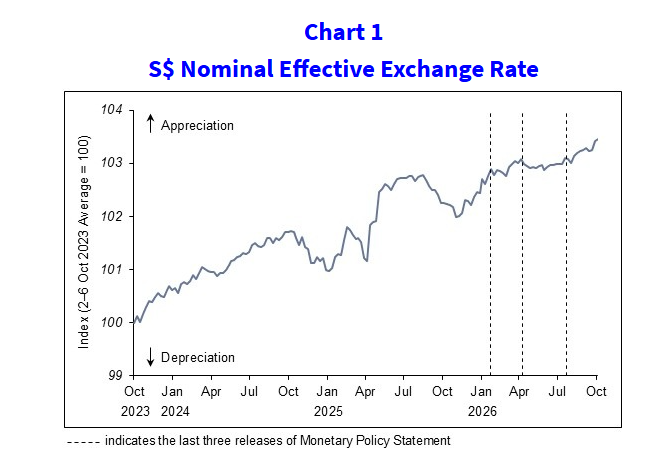
MAS does not set an interest rate. It manages the Singapore dollar against a basket of currencies. If markets expect the Singapore dollar to rise, they accept lower SGD interest rates. That is why 3M SORA moved only from about 1.19% to 1.23% around a Fed hike. MAS adjusted its policy band slightly in April and July 2026.
- 3-month compounded SORA (Singapore)
- US federal funds rate (effective)
Latest: SORA 1.24% (14 Oct 2026); Fed 3.88% (13 Oct 2026).
SORA is the benchmark for floating-rate home loans in Singapore. The US rate is shown for context: it moves SORA only indirectly, through the Singapore dollar and bank funding costs.
Table view
| Period | 3-month compounded SORA (Singapore) | US federal funds rate (effective) |
|---|---|---|
| Oct 2026 | 1.24% | 3.88% |
| Sep 2026 | 1.23% | 3.88% |
| Aug 2026 | 1.18% | 3.63% |
| Jul 2026 | 1.14% | 3.63% |
| Jun 2026 | 1.08% | 3.63% |
| May 2026 | 1.06% | 3.62% |
| Apr 2026 | 1.03% | 3.64% |
| Mar 2026 | 1.07% | 3.64% |
| Feb 2026 | 1.12% | 3.64% |
| Jan 2026 | 1.15% | 3.64% |
| Dec 2025 | 1.19% | 3.64% |
| Nov 2025 | 1.25% | 3.89% |
| Oct 2025 | 1.32% | 4.11% |
| Sep 2025 | 1.46% | 4.09% |
| Aug 2025 | 1.56% | 4.33% |
| Jul 2025 | 1.86% | 4.33% |
| Jun 2025 | 2.06% | 4.33% |
| May 2025 | 2.27% | 4.33% |
| Apr 2025 | 2.40% | 4.33% |
| Mar 2025 | 2.55% | 4.33% |
| Feb 2025 | 2.73% | 4.33% |
| Jan 2025 | 2.90% | 4.33% |
| Dec 2024 | 3.08% | 4.33% |
| Nov 2024 | 3.21% | 4.58% |
| Oct 2024 | 3.39% | 4.83% |
| Sep 2024 | 3.49% | 4.83% |
| Aug 2024 | 3.57% | 5.33% |
| Jul 2024 | 3.64% | 5.33% |
| Jun 2024 | 3.63% | 5.33% |
| May 2024 | 3.66% | 5.33% |
| Apr 2024 | 3.65% | 5.33% |
| Mar 2024 | 3.68% | 5.33% |
| Feb 2024 | 3.64% | 5.33% |
| Jan 2024 | 3.66% | 5.33% |
| Dec 2023 | 3.70% | 5.33% |
| Nov 2023 | 3.75% | 5.33% |
| Oct 2023 | 3.75% | 5.33% |
| Sep 2023 | 3.70% | 5.33% |
| Aug 2023 | 3.70% | 5.33% |
| Jul 2023 | 3.68% | 5.33% |
| Jun 2023 | 3.65% | 5.07% |
| May 2023 | 3.61% | 5.08% |
| Apr 2023 | 3.61% | 4.83% |
| Mar 2023 | 3.58% | 4.83% |
| Feb 2023 | 3.23% | 4.58% |
| Jan 2023 | 3.12% | 4.33% |
| Dec 2022 | 3.03% | 4.33% |
| Nov 2022 | 2.87% | 3.83% |
| Oct 2022 | 2.45% | 3.08% |
| Sep 2022 | 2.07% | 3.08% |
| Aug 2022 | 1.55% | 2.33% |
| Jul 2022 | 1.27% | 2.32% |
| Jun 2022 | 0.72% | 1.58% |
| May 2022 | 0.52% | 0.83% |
| Apr 2022 | 0.32% | 0.33% |
| Mar 2022 | 0.27% | 0.33% |
| Feb 2022 | 0.25% | 0.08% |
| Jan 2022 | 0.20% | 0.08% |
| Dec 2021 | 0.19% | 0.08% |
| Nov 2021 | 0.16% | 0.08% |
| Oct 2021 | 0.16% | 0.07% |
| Sep 2021 | 0.13% | 0.08% |
| Aug 2021 | 0.13% | 0.08% |
| Jul 2021 | 0.13% | 0.10% |
| Jun 2021 | 0.14% | 0.10% |
| May 2021 | 0.17% | 0.05% |
| Apr 2021 | 0.19% | 0.07% |
| Mar 2021 | 0.23% | 0.07% |
| Feb 2021 | 0.20% | 0.07% |
| Jan 2021 | 0.17% | 0.07% |
| Dec 2020 | 0.17% | 0.09% |
| Nov 2020 | 0.12% | 0.08% |
| Oct 2020 | 0.12% | 0.09% |
| Sep 2020 | 0.10% | 0.09% |
| Aug 2020 | 0.10% | 0.09% |
| Jul 2020 | 0.08% | 0.09% |
| Jun 2020 | 0.14% | 0.08% |
| May 2020 | 0.27% | 0.05% |
| Apr 2020 | 0.53% | 0.05% |
| Mar 2020 | 0.90% | 0.10% |
| Feb 2020 | 1.14% | 1.58% |
| Jan 2020 | 1.20% | 1.55% |
| Dec 2019 | 1.27% | 1.55% |
| Nov 2019 | 1.31% | 1.55% |
| Oct 2019 | 1.46% | 1.83% |
| Sep 2019 | 1.53% | 1.83% |
| Aug 2019 | 1.59% | 2.12% |
| Jul 2019 | 1.67% | 2.40% |
| Jun 2019 | 1.72% | 2.40% |
| May 2019 | 1.68% | 2.38% |
| Apr 2019 | 1.62% | 2.44% |
| Mar 2019 | 1.54% | 2.43% |
| Feb 2019 | 1.59% | 2.40% |
| Jan 2019 | 1.52% | 2.40% |
3. How SORA reaches your loan
SORA is compounded over the past three months, so it moves with a delay. Your loan resets only every three months. A rise in the market shows up in your instalment some months later, and so does a fall. That delay is a cushion when rates rise, and a lag when they fall.
4. Banks’ funding costs and competition
Banks fund loans from deposits and wholesale markets. When funding costs rise, they pass some on. When banks compete hard for loans, spreads fall. The lowest floating spread in September 2026 was 0.20%, which is thin. This factor matters as much as the benchmark. A bank can raise your spread when your lock-in ends, even if SORA does not move.
5. Inflation and growth
When inflation and growth run hot, central banks tighten to cool the economy. For Singapore, MAS does this mainly through the exchange rate, as factor 2 explains. Strong growth and rising wages also raise demand for credit, which supports rates. The 2015 article’s older points about full employment and GDP growth still hold, but today the effect arrives through the Fed and the Singapore dollar.
6. Global shocks and capital flows
A crisis can push rates in two directions. Fear can send money to safe currencies, which may lower SGD rates. A funding squeeze can lift the cost of borrowing. SORA was about 3.5–3.8% in 2023, and it has fallen to about 1.24% since. You cannot predict the next shock, so plan for the range.
Factors that move your spread and package
7. Fixed or floating: what the market expects
A fixed rate includes the market’s view of future rates, plus a charge for the bank taking the risk. In October 2026, fixed packages (about 2.0–2.2%) cost more than floating ones (about 1.5–1.8%). The gap partly reflects what banks charge to carry rate risk. Compare it with your own appetite for risk. Our SORA versus fixed guide works through the choice.
8. Which loan you take
The HDB concessionary loan does not follow SORA. It is pegged at 0.1 point above the CPF Ordinary Account rate, which is 2.5% with a legislated floor. So it is 2.6% in the fourth quarter of 2026. It is stable and higher than bank packages today. Bank loans for HDB flats and private homes follow the market.
9. Your own loan: size, profile and terms
Banks look at the loan size, the loan-to-value ratio, your credit record and the property. Package terms also differ by loan size. PropertyNet notes that loans below S$500,000 are often not fully subsidised for legal fees. The terms change the real cost too: the lock-in, the penalty, and the clawback on subsidies. You cannot change your credit record overnight, but you can ask several banks for offers and compare them.
What does not change your rate
Regulation affects how much you can borrow, not what you pay. Banks must test your loan at a 4% floor, and TDSR caps your total debt payments at 55% of income. A lower market rate does not lift those limits. So a 1.4% package does not let you borrow more.
A worked example: benchmark versus spread
Say you borrow S$1m over 30 years. All rates below are examples.
| Case | All-in rate | Monthly instalment |
|---|---|---|
| SORA 1.23% + spread 0.20% | 1.43% | S$3,418 |
| Same SORA, spread 0.45% | 1.68% | S$3,538 |
| SORA rises to 3.5% + spread 0.20% | 3.70% | S$4,603 |
A 0.25-point higher spread costs S$120 a month, or about S$2,900 over two years. A rise in SORA to the 2023 level costs S$1,185 a month. The benchmark risk is much bigger. But the spread is the part you can win by shopping, and it is paid on every instalment. Use the mortgage calculator with your own numbers.
S$ a month
Source: Propwise calculation (worked example in the article); SORA from MAS (October 2026). All rates are examples.
What to do with this
- Test your budget at 4%, the rate banks use.
- Compare the spread for every year, not only year one.
- Choose fixed or floating by how much rate risk you can carry.
- Diary your lock-in end date, and compare offers three months before it. Our refinancing guide shows how.
Bottom line
The benchmark is set by the Fed, MAS and the Singapore dollar. You cannot change it, but you can prepare for it. Your spread, your loan size and your package terms are yours to shape. Borrow as if rates will reach 4%, and then a rise is a nuisance and not a crisis. Nothing here is personal financial advice.